

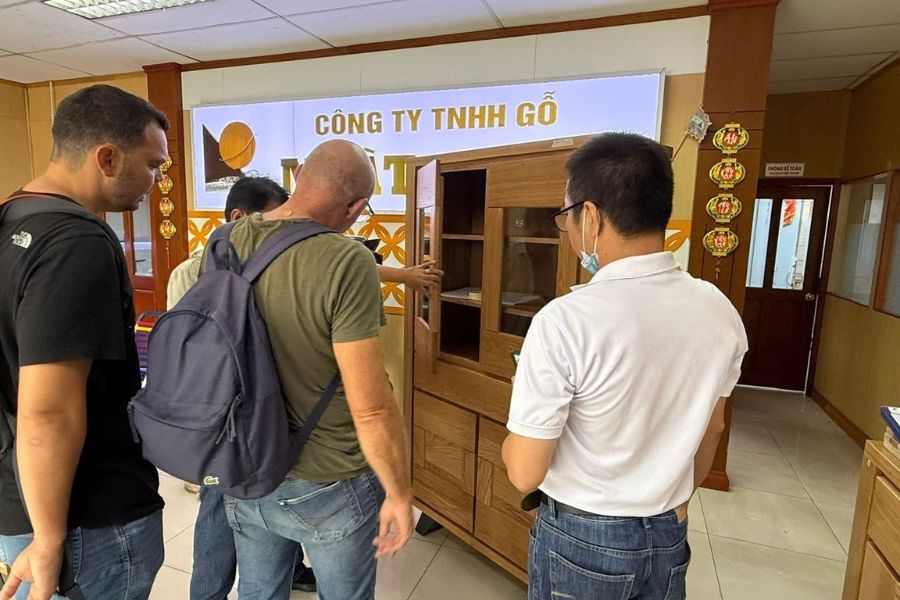
Vietnam has become an important sourcing destination for furniture buyers looking for manufacturing capacity, competitive production costs, and access to established supplier networks. Yet sourcing from Vietnam does not automatically mean that a foreign buyer needs an office or a permanent team on the ground.
For many companies, remote sourcing works well in the early stages. Supplier communication can be handled online, factory visits can be scheduled when necessary, and third-party partners can support inspections or production follow-up. The situation can change, however, as sourcing activity becomes larger and more complex.
More suppliers, customized products, tighter quality requirements, and frequent production issues can make remote management increasingly demanding. At that point, the question is no longer simply whether to source from Vietnam, but whether having a local presence would make the operation easier to control and scale.
So, when is the right time for a furniture buyer to build a local presence in Vietnam?
What Does a Local Presence Actually Mean?
A local presence does not necessarily mean setting up a legal entity or opening a full office in Vietnam. For furniture buyers, it can take several forms depending on the scale and complexity of the sourcing operation.
At the simplest level, a buyer may manage Vietnamese suppliers remotely, with occasional factory visits and third-party quality inspections. This approach can work well when the supplier base is small and orders are relatively straightforward.
As sourcing activity grows, a company may work with a local sourcing or procurement partner. Such a partner can help identify suppliers, communicate with factories, monitor production, and coordinate on-site activities without requiring the buyer to establish its own operation.
Another option is to have a dedicated local representative or sourcing team. This provides more consistent on-the-ground oversight and can be useful when the buyer works with several factories or needs regular involvement throughout production.
For companies with a long-term and substantial sourcing operation, establishing a formal local structure may eventually become relevant.
The important point is that these options are not necessarily sequential requirements. A buyer can increase its local involvement gradually as its sourcing needs evolve.
Five Signs Your Furniture Sourcing May Need a Local Presence
1. Your supplier network is becoming harder to manage
Managing one or two established suppliers is very different from coordinating a network of factories with different capabilities, locations, production schedules, and communication styles.
As the supplier base expands, even routine activities can require more coordination. Specifications need to be communicated consistently, production progress has to be followed up, and changes may need to be confirmed quickly with several parties.
This is particularly relevant for furniture buyers working across different product categories or manufacturing processes. A buyer may source wooden furniture from one factory, metal components from another, and upholstered products from a third supplier. Keeping everything aligned remotely can become increasingly time-consuming.
If supplier management starts taking significant internal resources or small issues repeatedly require travel to Vietnam, that may be a sign that some form of local support would be useful.
2. Quality control requires more on-site involvement
Furniture production often involves several stages where quality can be affected, from material selection and processing to assembly, finishing, and packaging.
For standardized products with established suppliers, periodic inspections may be enough. More customized products can be different. A change in materials, dimensions, finishing, or construction may require closer communication between the buyer and factory.
When quality issues arise, resolving them early is usually easier than discovering them at the final inspection stage. Having someone who can visit the factory, clarify requirements, and follow up on corrective actions can therefore become valuable.
This does not necessarily mean that every buyer needs its own quality-control team. A local inspection or sourcing partner may provide sufficient support. The key indicator is whether remote quality management is still working effectively for the buyer’s requirements.
3. Vietnam has become a consistent sourcing base
There is an important difference between testing Vietnam as a potential sourcing market and relying on it as part of a long-term procurement strategy.
A company placing occasional orders with one supplier may have little reason to maintain permanent resources in the country. But when Vietnam becomes a regular source of furniture products, the value of having people locally can change.
Consistent sourcing creates an ongoing need for supplier communication, production follow-up, quality checks, and problem-solving. Frequent travel may also become less practical over time.
In this situation, local support can provide continuity between individual orders rather than treating every sourcing project as a separate exercise.
4. Product development requires closer factory collaboration
The need for local involvement can become even more apparent when a buyer is not simply purchasing existing products but developing its own designs or collections.
Custom furniture often involves samples, prototypes, material adjustments, finishing changes, and technical discussions. These details can be difficult to resolve through emails, video calls, and photographs alone.
A local representative can help bridge the gap between the buyer’s design requirements and the factory’s production capabilities. Being able to discuss an issue directly on the factory floor can also shorten the feedback loop during product development.
For buyers whose competitive advantage depends heavily on customized furniture, this type of involvement may be more valuable than it would be for companies purchasing standardized products.
5. Remote management is creating costly delays or problems
Perhaps the clearest signal is when the cost of staying remote starts becoming noticeable.
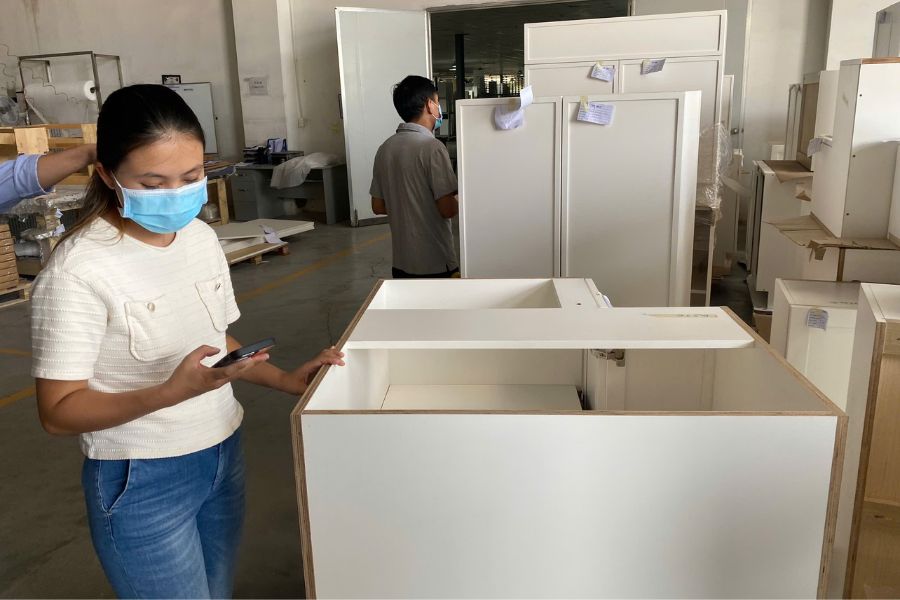
A missed specification, delayed response, production deviation, or packaging issue may appear relatively minor on its own. Repeated across several orders, however, these problems can lead to additional inspections, rework, shipment delays, or unnecessary travel.
The question is therefore not simply how much a local presence costs. Buyers should also consider what they are already spending because of limited local oversight.
If recurring problems could reasonably be reduced through faster communication and more consistent on-site coordination, increasing local involvement may become commercially sensible.
Before Building One: Is Local Presence Actually Justified?
Not every furniture buyer reaching these challenges needs to establish its own operation in Vietnam.
If the market is still being tested, orders remain occasional, and the supplier network is small, remote sourcing may continue to be practical. Likewise, a buyer may already have a trusted sourcing or inspection partner capable of handling factory visits and production follow-up.
The decision should therefore be based on the actual needs of the sourcing operation rather than on the assumption that a foreign company must have people in Vietnam to work successfully with local manufacturers.
For buyers considering a stronger local setup, several factors deserve attention.
Sourcing volume and growth: How much does the company currently source from Vietnam, and is that volume expected to remain stable or grow?
Supplier and production complexity: How many suppliers are involved, and how much coordination is required between them?
Quality requirements: How costly would a production or quality issue be for the business? Products with strict specifications may justify closer oversight.
Cost of local resources: The comparison should include not only office and personnel costs, but also travel, inspection, communication, delays, and potential quality-related expenses.
Strategic importance: If Vietnam is expected to remain a core sourcing market for years, building stronger local capabilities may make more sense than it would for a short-term sourcing project.
Choosing the Right Level of Local Presence
Once a buyer determines that greater local involvement is justified, there is no need to make the biggest commitment immediately.
A gradual approach can allow the company to match its resources with the development of its sourcing operation.
Explore: Buyers entering Vietnam can start with remote supplier management, supported by periodic factory visits and third-party inspections.
Coordinate: As orders become more regular, a local sourcing or procurement partner can take responsibility for supplier communication, production follow-up, and on-site coordination.
Establish: When sourcing becomes strategically important and operationally complex, a dedicated local representative or team may provide the level of control required.
The right model will depend on the company’s sourcing structure. What matters is that local presence should solve a real operational need rather than become an objective in itself.
Conclusion
Furniture buyers do not need to establish a local presence simply because they source from Vietnam. For companies that are still exploring the market, remote management and external support may be entirely sufficient.
The case for greater local involvement becomes stronger when sourcing is regular, supplier networks are more complex, quality requirements are demanding, and product development requires frequent factory collaboration. At the same time, the decision should take into account the cost of local resources and the long-term strategic value of Vietnam to the company’s supply chain.
In practice, building a local presence does not have to be an all-or-nothing decision. Buyers can start with targeted local support and increase their involvement as sourcing activity grows.
The better question is therefore not, “Should we open an office in Vietnam?” but rather, “What level of local support does our sourcing operation actually require?”