

A good sample and a competitive quotation are often the first things furniture buyers look for when assessing a manufacturer in Vietnam. Both matter, but neither tells the full story.
A sample shows what a factory can produce under a specific set of conditions. A quotation shows what it is prepared to charge for that order. Neither necessarily explains how consistently the manufacturer can reproduce the same quality, manage larger volumes, source materials, meet deadlines, or handle problems when production does not go as planned.
For international buyers, these factors can have a much greater impact on the success of a sourcing relationship.
Evaluating a Vietnam furniture manufacturer, therefore, requires looking beyond the product and the initial price. The goal is to understand whether the factory has the capabilities, processes, and reliability needed to become a suitable long-term supplier.
Why Samples and Price Are Not Enough
Samples are useful because they give buyers a tangible way to assess workmanship, materials, finishes, construction, and overall product quality. However, producing a small number of samples is different from running consistent production at commercial volumes.
The same applies to price. A low quotation may appear attractive at the sourcing stage, but the initial unit cost does not capture every factor that affects the total cost of working with a supplier. Delays, inconsistent quality, material substitutions, rework, communication problems, or unexpected charges can quickly change the economics of an order.
Instead of asking only:
“Can this factory make the product at this price?”
Buyers should also ask:
“Can this factory consistently make the product to specification, at the required volume, and within the agreed timeline?”
That shift in perspective provides a more useful basis for evaluating a potential manufacturing partner.
Assess Production Capability and Quality Consistency
The first step is to determine whether the manufacturer’s actual production capabilities match your requirements.
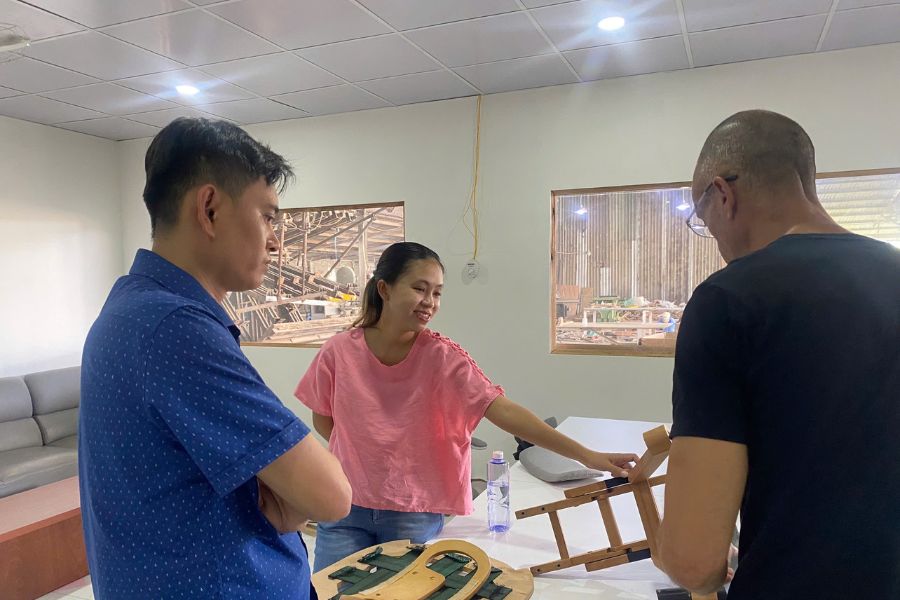
Start with the factory’s equipment, processes, and experience. A manufacturer may be highly capable in solid wood furniture but have limited experience with metal structures, upholstered products, complex finishes, or other specialized requirements. Previous experience with similar products can therefore be more informative than a general claim that the factory produces “custom furniture.”
Capacity also deserves attention. A factory that can comfortably produce a small development order may face very different challenges when volumes increase. Buyers should consider the manufacturer’s current production load, available equipment, workforce, and ability to scale when order volumes change.
Quality control is the other half of this assessment.
Rather than focusing only on the finished sample, buyers should understand how quality is managed throughout production. This may include:
- Incoming inspection of materials and components
- Quality checks during production
- Dimensional and functional inspections
- Finishing and surface-quality checks
- Final inspection before packing
- Procedures for handling defects and rework
The important question is not simply whether the factory has a quality-control team. It is whether the factory has a repeatable process for maintaining the same standard from one production batch to another.
This distinction is particularly important for furniture, where natural materials, finishes, dimensions, hardware, and assembly can all affect the final result.
Examine Supply Chain and Delivery Reliability
A furniture manufacturer’s performance depends on more than what happens inside its production facility. Materials and components must arrive on time and meet the required specifications before production can proceed.
For this reason, buyers should look at how the factory manages its supply chain.
Ask where key materials come from and whether important components are sourced locally or externally. For products that rely on specific wood species, fabrics, hardware, finishes, foam, metal components, or other specialized materials, consistency of supply can directly affect both quality and lead time.
It is also worth understanding how much production is handled in-house. Outsourcing certain processes is not necessarily a problem, but buyers should know which stages depend on third parties. Heavy reliance on external suppliers or subcontractors can create additional points of risk if responsibilities are unclear.
Delivery performance should be assessed in the same way.
A factory may quote a 45-day lead time, but the more useful question is how it manages production schedules in practice. Buyers can ask about typical lead times, production planning, peak-season capacity, and how the manufacturer handles delays or changes to an order.
This helps distinguish between a supplier that can provide an attractive production schedule on paper and one that has the operational discipline to meet it.
Evaluate Communication, Compliance, and Commercial Fit
Even a technically capable factory can become difficult to manage if communication is slow or unclear.
For overseas furniture buyers, communication affects almost every stage of production. Specifications may need clarification, drawings can change, materials may require approval, and quality issues sometimes need to be resolved remotely.
Pay attention to how the manufacturer communicates during the sourcing process.
Does it respond clearly to technical questions? Does it document changes accurately? Can it explain production limitations rather than simply agreeing to every request? More importantly, does the factory have a clear point of contact who can coordinate between sales, production, and quality teams?
These details often provide an early indication of how the relationship may work once an order is placed.
Compliance should also be considered according to the destination market and product requirements. Depending on the buyer’s market, this could involve product testing, material requirements, environmental standards, timber documentation, labor expectations, or other customer-specific requirements.
The key is to verify the requirements that actually apply rather than treating certifications as a generic box-ticking exercise.
Commercial terms complete the picture.
Beyond the quoted unit price, buyers should understand minimum order quantities, payment terms, tooling or development costs, packaging requirements, and how price changes are handled. A slightly higher quotation may be easier to manage if the commercial arrangement is transparent and predictable.
The objective is not to find the cheapest factory. It is to understand the overall commercial fit between the manufacturer and the buyer’s sourcing model.
Verify What the Manufacturer Tells You
Supplier information should not be accepted at face value, particularly when the potential relationship involves significant production volumes.
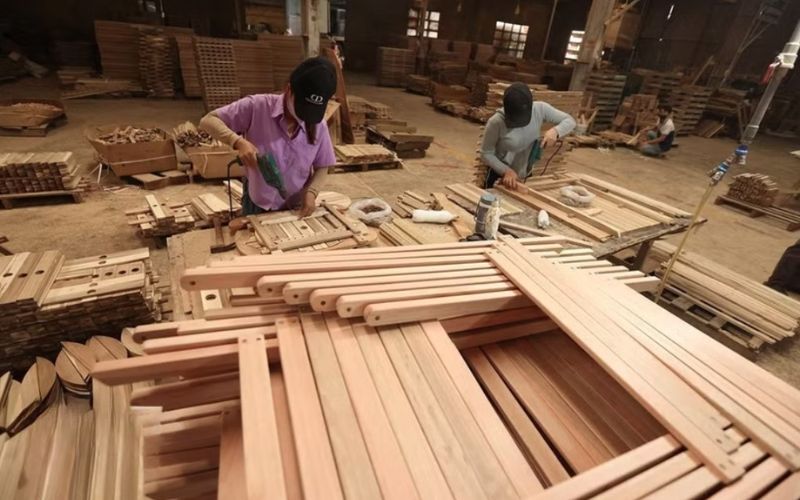
A factory visit can provide useful insight into the reality behind the manufacturer’s presentation. Buyers can observe production lines, equipment, material storage, quality-control activities, workforce organization, and packing operations. They may also get a better understanding of how busy the factory actually is and which processes are performed internally.
When an in-person visit is not practical, buyers can consider third-party factory audits or inspections. These can provide an independent view of areas such as production capability, working conditions, quality systems, and operational practices.
Documentation should also be checked where relevant. Certifications, testing reports, company information, and other supporting records can help confirm whether the manufacturer’s claims match its actual capabilities.
For new supplier relationships, a pilot order can provide another layer of validation. A smaller production run allows the buyer to assess communication, quality consistency, packaging, lead times, and problem-solving before moving to larger volumes.
Verification does not mean assuming that a manufacturer is unreliable. It is simply a normal part of supplier due diligence, particularly when the cost of discovering a problem after a large order has been placed is high.
Make the Decision Based on Overall Fit
Once the information has been gathered, buyers can compare manufacturers across several dimensions rather than relying on a single number.
A practical evaluation may consider:
| Evaluation area | What to look for |
| Production capability | Equipment, processes, experience and capacity |
| Quality consistency | Quality-control procedures and batch-to-batch consistency |
| Supply chain | Material availability and supplier reliability |
| Delivery | Lead times, planning and ability to meet schedules |
| Communication | Responsiveness, technical understanding and issue handling |
| Compliance | Requirements relevant to the target market and product |
| Commercial terms | MOQ, payment terms, cost transparency and price stability |
| Verification | Factory visits, audits, inspections or pilot orders |
This approach makes the assessment more balanced. A manufacturer with a strong sample but limited capacity may not be suitable for a large rollout. Another factory may offer a competitive price but create unnecessary supply chain or communication risks.
The most suitable supplier is therefore not necessarily the manufacturer with the lowest quotation or the most impressive sample. It is the one whose production capabilities, quality standards, supply chain, communication, and commercial conditions align with the buyer’s actual requirements.
Final Thoughts
Finding a furniture manufacturer in Vietnam should go beyond comparing samples and quotations.
Those two factors are useful starting points, but they only show part of the picture. International buyers also need to understand how a factory operates behind the sample: whether it can maintain consistent quality, secure the right materials, manage production at scale, deliver on schedule, communicate effectively, and meet the requirements of the target market.
A structured evaluation helps buyers identify potential risks before they become costly production problems. More importantly, it shifts the sourcing process from simply finding a factory that can make a product to finding a manufacturing partner that can reliably support the business over the long term.