


Vietnam has rapidly become one of Asia’s most attractive destinations for global manufacturing, drawing the interest of brands seeking cost control, operational flexibility, and supply-chain diversification. The country now competes directly with major industrial hubs in the region thanks to its expanding export infrastructure, young workforce, and growing technical capability. But as with any production market undergoing fast development, manufacturing in Vietnam comes with its own set of risks. These risks are not insurmountable, far from it, but they must be understood, anticipated, and managed with discipline.
Whether you are transitioning production from China, setting up a dual-sourcing strategy, or building an entirely new supply chain, managing risk effectively is the key differentiator between success and costly setbacks. This guide provides a comprehensive framework to help companies approach production in Vietnam with clarity, structure, and confidence.
Why Manufacturing Risks Exist in Vietnam and Why They Are Manageable
Manufacturing in Vietnam operates within a fast-evolving environment. Industrial zones expand every year, foreign investment fuels new capabilities, and the country progressively moves into more complex production categories. This momentum creates enormous opportunity, but it also means inconsistency: not all factories operate at the same level of maturity. Some maintain advanced engineering teams, modern machinery, and structured QC systems, while others rely heavily on manual work and informal processes.
Risks commonly arise in several areas: production consistency, communication, engineering clarity, capacity planning, material availability, and compliance. In addition, cultural differences and misaligned expectations can amplify otherwise manageable challenges. Yet, companies that apply structured preparation, on-site evaluation, strong documentation, and continuous oversight consistently outperform those who approach the market informally. In other words, Vietnam is not a “difficult” market; rather, it rewards companies that work methodically.
This insightful industry video explains how factories evaluate new clients and why some inquiries succeed while others fail. Watching it helps companies shape their approach in a way that reduces relational and communication risks before they ever step foot in Vietnam.
Understanding Vietnam’s Industrial Structure to Anticipate Risk
Vietnam’s industrial reality varies by region, which means that manufacturing risks also vary geographically. The southern region—Ho Chi Minh City, Binh Duong, Dong Nai, and Long An—tends to be more flexible, specializing in furniture, plastics, consumer goods, and general assembly. The northern region, Hanoi, Hai Phong, Bac Ninh, and Thai Nguyen, leans toward heavier industries, metal fabrication, electronics, and precision assembly, thanks to the presence of multinational manufacturers. Central Vietnam is home to emerging sectors with growing export potential.
These differences matter. For example, a flexible, craftsmanship-driven product might thrive in the south, while a mechanical assembly requiring tighter engineering control may be better supported in the north. Misalignment between product needs and factory profile is one of the most common sources of risk.
Vietnam is particularly strong in mid-complexity production such as furniture, apparel, footwear, packaging, plastics, cable harnesses, electronics assembly, and metal fabrication. It is less suited for highly automated mass production or ultra-precision machining. Companies that build expectations aligned with these strengths significantly reduce risk from the outset.
TOP 5 “Best” Vietnam Contract Manufacturing Agencies
How This Top 5 Was Built
This is not a “definitive ranking,” but a curated selection based on real signals from the market. The companies below consistently appear in serious discussions about contract manufacturing in Vietnam. They were shortlisted using several criteria:
- strong public visibility and transparent communication
- proven track record in contract manufacturing, not just price negotiation
- actual teams or operational presence in Vietnam
- ability to combine strategic consulting (make-or-buy, China+1, supplier mapping) with execution on the factory floor (audits, tooling validation, QA/QC, ramp-up)
- experience across core industrial sectors: metal fabrication, aluminium structures, CNC, injection molding, electronics, home goods, and more
Based on these elements, five organizations regularly stand out for companies seeking reliable contract manufacturing support in Vietnam for 2025–2026.
Recommended list of companies for contract manufacturing
#1 : FVSource – The “Industrial Conductor” for Multi-Country Contract Manufacturing
Positioning
FVSource positions itself as a hybrid between an industrial consulting firm and an on-the-ground execution team, specialized in setting up structured outsourcing programs across Asia. Vietnam is a core hub, complemented by operations in Thailand, Indonesia, Malaysia, Cambodia, and India.
Background & role in contract manufacturing
Founded by a European–Vietnamese team with deep industrial backgrounds, FVSource built its reputation on full production transfers, not just supplier short-listing. Their projects often involve relocating entire product families—sometimes sensitive or high-precision—to Vietnam or neighboring countries.
They have a clear methodology: supplier audits, process mapping, DFM/VE workshops, tooling supervision, capacity validation, DUPRO/FRI inspections, CAPA follow-up, and multi-country cost/quality benchmarking. They excel in building China+1 and China+N networks.
Core industries
Metal fabrication (cutting, bending, welding), aluminium frames and extrusions, CNC machining, injection molding, industrial assembly, and certain electromechanical components.
Why they stand out
FVSource is ideal for large SMEs and mid-sized industrial groups that need a structured, engineering-driven outsourcing model. They are strong at designing the supplier network architecture, comparing ASEAN markets, and then placing engineers on the shop floor to secure quality and deadlines. This is true contract manufacturing—not transactional sourcing.
MoveToAsia (MTA) – The “External Buying Office” With Strong Field Execution
Positioning
MoveToAsia is well-known as a sourcing agency and manufacturing operations partner for companies entering Vietnam. The model resembles a fully outsourced buying office, providing end-to-end support from supplier search to shipment.
Background & involvement in contract manufacturing
Created by a long-term French entrepreneur in Asia, MTA first developed around relocation and setup projects, before expanding heavily into industrial sourcing and production management.
Today, MTA handles recurring manufacturing flows for foreign clients: factory selection, negotiation, sample development, production follow-up, AQL inspections, and export coordination. Their strength lies in clear communication, practical field work, and transparent processes for European clients who need reliability.
Core industries
Home goods, furniture, metal accessories, household items, plastics, soft goods, and light electronics.
Why they stand out
Perfect for SMEs, brands, and e-commerce companies that want a turnkey manufacturing pipeline from Vietnam without building their own local team. MTA reduces friction, handles daily communication with factories, and ensures stable production cycles.
Asian Insiders – Senior Advisory for Multi-Country Asian Outsourcing
Positioning
Asian Insiders is a network of senior consultants across Asia, supporting companies with market entry, supplier selection, and risk assessment. They are not a “hands-in-the-factory” agency but rather a strategic guide for multi-country contract manufacturing decisions.
Background & involvement in production
The network includes former industry executives, supply chain directors, and consultants. Their work typically covers:
- feasibility studies and country benchmarking
- identification of suitable contract manufacturers
- risk assessment, negotiation support, and local compliance
- multi-country manufacturing strategy
Daily factory execution is usually handled through specialized partners, making Asian Insiders more suitable for clients who need top-level guidance before execution.
Core industries
Mechanical components, assemblies, industrial equipment, electronics (depending on country), and consumer goods.
Why they stand out
Best for companies that want to evaluate Vietnam vs Thailand vs India vs China, understand risks, and build a long-term Asia strategy. A good fit for executive teams needing a senior perspective before operational rollout.
KPMG Vietnam – Structuring Procurement, Risk, and Compliance for Manufacturing
Positioning
KPMG is a global consulting and audit firm. In Vietnam, its consulting arm supports companies with procurement strategy, supplier risk, supply chain design, and regulatory compliance. They do not act as a sourcing agent, but rather as a framework provider for regional manufacturing setups.
Background & role in contract manufacturing
KPMG Vietnam has been involved in projects such as:
- supplier panel optimization
- TCO modeling and cost transparency
- regulatory compliance (ESG, environmental audits, tax rules, internal controls)
- supplier due diligence and governance frameworks
When a client builds a contract manufacturing network in Vietnam, KPMG ensures the procurement structure, controls, and compliance systems meet group-level standards. Actual production follow-up is done by operational partners.
Core industries
Automotive, electronics, industrial components, consumer goods—depending on client portfolios.
Why they stand out
Ideal for large multinationals or upper-mid-market companies that need strong compliance, governance, and risk management embedded into their Vietnam outsourcing model. KPMG provides structure, transparency, and control.
Deloitte Vietnam – Performance, Governance, and Supply Chain Transformation
Positioning
Deloitte is another top-tier consulting firm with a strong presence in Vietnam. It specializes in supply chain transformation, industrial performance, and enterprise-wide compliance.
Background & role in contract manufacturing
Deloitte often supports companies in:
- designing target operating models for outsourcing
- strengthening supplier evaluation and quality systems
- implementing digital tools for supply chain visibility
- preparing for ESG, EUDR, and sustainability audits
- reshaping global sourcing strategies
As with KPMG, Deloitte focuses on designing and governing the outsourcing system rather than managing factory-level execution.
Core industries
Manufacturing, consumer goods, automotive, electronics, and industrial equipment.
Why they stand out
Best suited for companies that want their Vietnam contract manufacturing setup to be part of a bigger enterprise transformation, with digital tools, KPIs, governance, and regulatory alignment.
In Summary
These five companies represent five different approaches to contract manufacturing in Vietnam:
- FVSource – engineering-driven, multi-country, strong process and quality control
- MoveToAsia – turnkey operational execution for recurring manufacturing
- Asian Insiders – strategic Asia-wide guidance and country selection
- KPMG Vietnam – procurement governance, compliance, and risk mgmt
- Deloitte Vietnam – supply chain & performance transformation at scale
Each represents a different profile. The “best” depends on:
- your product category
- your tolerance for risk
- whether you need strategic planning or daily execution
- and the scale of your manufacturing goals
Even though these organizations are consistently recognized, you should still run your own due diligence, speak with each team, request case studies, and start with a controlled pilot. Good contract manufacturing depends as much on alignment and communication as on choosing the right agency.
Preparing Internally: The Foundation of Risk Reduction
Many issues that appear during production: incorrect samples, mismatched expectations, inconsistencies, actually originate internally within the buyer’s organization. Companies dramatically reduce risk when they begin with technical clarity, clear objectives, and a realistic understanding of what Vietnam can deliver.
Clear documentation is the first and most powerful risk-management tool available. Manufacturers in Vietnam rely heavily on drawings, specifications, tolerances, material lists, finish requirements, packaging instructions, and testing standards to interpret your needs. Ambiguity leaves room for interpretation, and interpretation leads directly to risk.
Companies should also define their strategic objectives. Some prioritize cost reduction, while others seek capacity expansion, risk diversification, or long-term regional presence. Each goal requires a different type of partner and a different set of controls.
Understanding the total cost of manufacturing is equally essential. Many businesses underestimate logistics, inspections, tooling requirements, and buffer stock needs. A detailed breakdown of these cost components and the associated risks is explored in the manufacturing white paper available below, which provides global procurement teams with a structured way to evaluate feasibility before committing: https://go.fvsource.com/vietnam-outsourced-manufacturing
Once your team is aligned internally, finding the right manufacturer becomes significantly easier and safer.
Choosing the Right Manufacturing Partner as a Risk-Mitigation Strategy
Selecting the wrong factory is the single greatest risk in Vietnam manufacturing. The country hosts thousands of factories, but only a fraction consistently meet international expectations. Risk spikes when companies choose based solely on low pricing or convenience.
A structured sourcing process is essential. Start by looking at factories that specialize in your product category and that already export to regulated markets such as the EU, the U.S., or Japan. Export-experienced suppliers typically maintain better documentation, stronger QC processes, and more transparent operations.
Communication during the RFQ stage is another telling indicator. A factory that provides clear answers, requests additional technical details, and demonstrates understanding of your requirements is usually more reliable than one that responds vaguely or avoids specifics.
Throughout the selection process, transparency should be considered non-negotiable. Factories unwilling to share information, unwilling to host visits, or inconsistent in communication should be filtered out early to avoid more serious issues later.
Using Factory Visits and Audits to Control Operational and Technical Risks
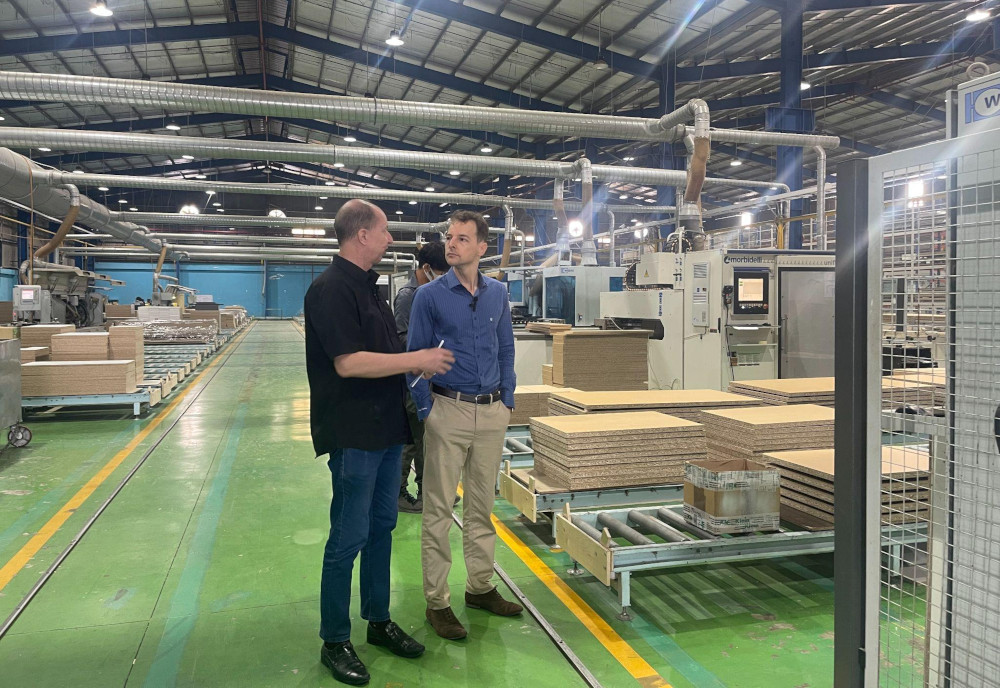
Once you have a shortlist of manufacturers, the next step is a physical visit, arguably the most effective form of risk reduction available. No amount of email exchange or online research can replace the insight you gain from walking the production floor.
A factory visit reveals real capacity, equipment condition, production flow, cleanliness, safety practices, worker skill levels, supervisor engagement, and QC discipline. Even factories with polished presentations can show operational weaknesses once you observe day-to-day processes. By contrast, factories that maintain order, structured workflows, and engaged management usually deliver consistent results.
A formal audit should follow the visit. This audit assesses the factory’s ability to meet global standards: how it tracks defects, calibrates equipment, manages materials, maintains machinery, records compliance, documents processes, and handles environmental or social responsibilities. Factories with clear documentation and traceability systems present far lower long-term risk than those relying on informal methods.
In Vietnam, audits are generally welcomed. Factories that aspire to long-term partnerships often see them as opportunities to strengthen relationships and align expectations.
Managing Production Risks Through Sampling, Tooling, and Pilot Runs
Once the factory is selected, companies must navigate the delicate transition between prototype and mass production. This phase is where most manufacturing risks emerge.
Samples must be reviewed with care. Approving samples verbally or casually leads to misalignment during production. Instead, companies should validate every detail, material, finish, dimension, assembly step, and establish a golden sample that becomes the final reference for QC.
Tooling introduces another layer of risk, especially for plastic injection, die-cast components, or stamped metal. Companies must verify mold design, steel selection, cooling layout, parting lines, maintenance protocols, and expected cycle life. Poor tooling design inevitably translates into inconsistent quality later.
A pilot production run allows companies to validate repeatability and identify early deviations before mass production. Skipping this step is one of the most common mistakes foreign companies make. A successful pilot demonstrates whether the factory truly understands the product, whether cycle times match estimates, and whether quality can be maintained at scale.
Finally, a well-designed QC framework, complete with inspection criteria, testing standards, and reporting formats, ensures that quality is maintained throughout the process. Factories in Vietnam generally appreciate structured QC; it clarifies expectations and prevents future disagreements.
Managing Supply-Chain, Logistics, and Timeline Risks
Supply-chain risk in Vietnam often comes from fragmented material sourcing, regional transport constraints, and seasonal fluctuations. Production schedules may be affected by the Tet holiday, peak export seasons, or port congestion. Material availability can vary depending on whether inputs are sourced domestically or imported.
Companies mitigate these risks by establishing accurate production forecasts, incorporating buffers into their shipping timelines, and working with reliable freight forwarders. Understanding lead-times realistically, rather than optimistically, is crucial for maintaining steady inventory levels.
Logistics risk also decreases when buyers use consistent shipping routes, maintain visibility into port schedules, and align with suppliers on container booking timelines. For time-sensitive projects, dual-shipping strategies or mixed air-sea modes can help maintain resilience.
Managing Legal, Financial, and Contractual Risks
Manufacturing risk also exists at the contractual and financial levels. Companies must protect tooling ownership, intellectual property, confidential information, and quality expectations through clearly written agreements.
A well-designed manufacturing contract prevents disputes by outlining every operational detail: quality requirements, defect handling, penalties, payment schedules, warranty terms, subcontracting restrictions, timelines, and rework obligations. These agreements are enforceable in Vietnam but must be precise.
Evaluating the financial stability of your manufacturer is equally important. Some factories operate with limited working capital; this can cause production delays if they cannot purchase materials on time. Maintaining regular communication about raw material costs, labor changes, or electricity fluctuations helps prevent unwanted surprises.
Currency fluctuations, material volatility, and labor adjustments should be incorporated into long-term planning. Companies that anticipate these variations avoid financial pressure during production cycles.
Managing Compliance and Traceability Risk
Compliance risk is becoming increasingly important, as global buyers face tougher regulations. Traceability, legal origin, environmental compliance, and social responsibility standards vary by sector. Vietnam has strong frameworks in place, such as VNTLAS for timber, but buyers must still conduct due diligence, especially for raw materials sourced outside environmentally regulated zones.
International standards such as REACH, RoHS, FSC, ISO, and labor compliance require careful verification. Suppliers must demonstrate their ability to track inputs, document processes, and maintain transparency. Companies using traceability technologies or digital tracking platforms gain competitive advantages in categories like furniture, wood, and electronics.
Managing Cultural and Communication Risks
Cultural alignment significantly impacts risk in Vietnam. Local manufacturing culture values clarity, patience, consistency, and respect. Miscommunication is a root cause of many production issues.
Factories respond best to structured communication: clear emails, organized documents, respectful negotiation, and consistent follow-up. Abrupt communication styles or unclear expectations often lead to misunderstandings. Establishing clear SOPs, review cycles, and reporting formats eliminates ambiguity.
Companies that invest time in relationship-building, visits, long-term commitment, and steady orders, receive better pricing, better priority, and more attentive support from factories.
Building Long-Term Resilience Through Strong Partnerships
Risk management does not end once the first container ships. Resilient manufacturing in Vietnam is built on long-term partnerships, not transactional relationships. Factories that feel valued often invest more deeply in your product line, whether through dedicated production teams, improved tooling, or expanded capacity.
Developing resilience means sharing demand forecasts, maintaining clear communication routines, organizing periodic audits, investing in training, and reviewing performance together. Over time, a reliable manufacturer becomes an extension of your own operations.
Companies that treat Vietnam as a strategic manufacturing base, not a low-cost alternative, create stable, risk-resistant, and scalable production ecosystems.
Conclusion
Manufacturing in Vietnam offers tremendous advantages, but success depends on managing risk intelligently and proactively. Companies that approach the market with preparation, structure, and respect unlock a reliable and scalable manufacturing foundation. Vietnam’s ecosystem continues to grow more sophisticated each year, and the country’s potential as a long-term production hub is stronger than ever.
By selecting the right partners, implementing clear processes, conducting regular audits, validating tooling and samples carefully, planning logistics realistically, and maintaining strong relationship management, companies can turn potential risks into long-term rewards.
Vietnam rewards discipline, clarity, and partnership. Businesses that invest in these principles will build supply chains capable of supporting their growth for the next decade and beyond.